Tangy Dill Pickle Sourdough Bread Recipe
Introduction
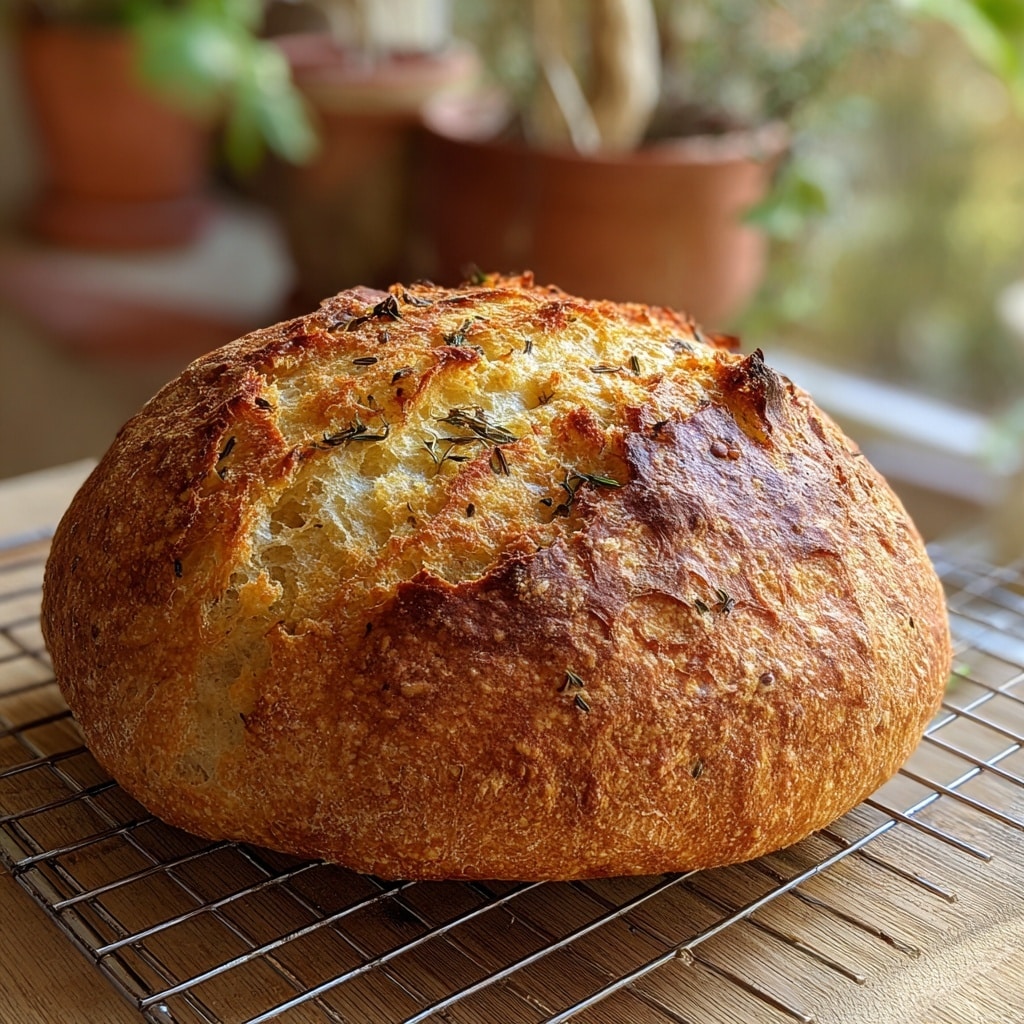
If you’re looking to add a tangy twist to your traditional sourdough, this dill pickle sourdough bread is the perfect recipe. It combines the bright flavor of pickles with fresh dill for a savory loaf that’s great for sandwiches or simply enjoying with butter. This bread is a clever way to use up your sourdough starter and leftover pickles while creating something uniquely delicious.
Ingredients
- 50g active sourdough starter
- 7g fine sea salt
- 35g whole wheat flour
- 260g filtered water (warmed to 85°F)
- 375g white bread flour
- 30g dill pickle brine
- 1 1/2 tbsp fresh dill (finely chopped)
- 80g diced dill pickles (patted dry)
Instructions
- Step 1: In a large bowl, mix the sourdough starter, warmed water, and pickle brine with a fork until well combined. Add the whole wheat and bread flours, mixing first with a spatula then your hand until a shaggy dough forms with no dry flour. Sprinkle salt over the top, cover with a damp cloth, and let rest for 40 minutes.
- Step 2: Knead the dough by hand for two minutes to incorporate the salt. Perform a stretch and fold by grabbing a portion of dough, stretching it upward, and folding it over itself. Cover and rest for 30 minutes.
- Step 3: Evenly sprinkle diced pickles and chopped fresh dill over the dough, reaching the edges. Perform another stretch and fold to embed the mix-ins, then rest for 30 minutes.
- Step 4: Repeat two more stretch and fold cycles with 30-minute rests between each to build dough structure, for a total of four cycles.
- Step 5: Allow the dough to bulk ferment covered at room temperature until it rises about 75%, around 4 hours at 74°F. When ready, gently transfer to a floured surface and let rest 10-15 minutes. Shape the dough, place it seam-side up in a flour-dusted, linen-lined banneton, cover, and allow the final rise.
- Step 6: Final proof can be done overnight in the fridge (up to 12 hours) or about 1 1/2 hours at room temperature. Preheat oven to 450°F with a Dutch oven inside. Transfer dough to parchment, flip seam side down, score at least 1/2 inch deep, then place in the Dutch oven. Bake covered at 450°F for 25 minutes, uncover and reduce heat to 435°F, bake 20 more minutes until golden and crackly.
- Step 7: Cool bread for at least one hour before slicing to develop ideal texture and prevent gumminess.
Tips & Variations
- Use refrigerated kosher dill pickles for the best flavor and texture; pat them very dry to avoid excess moisture in your dough.
- If fresh dill is unavailable, substitute with 1½ teaspoons of dried dill weed, but avoid dill seeds as they alter flavor and texture.
- All-purpose flour can replace bread flour, though expect a slightly less chewy crumb and lower rise.
- Fold in pickles during the later stretch and fold to prevent them from breaking down and adding too much moisture.
- Freeze extra sliced bread wrapped with parchment between slices for up to 3 months; toast or warm to revive flavor.
Storage
Store your dill pickle sourdough wrapped in a clean kitchen towel or a bread bag at room temperature for 4–5 days; avoid refrigerating as it can stale the bread faster. For longer storage, slice the bread once cooled, separate slices with parchment, and freeze in a freezer bag for up to 3 months. Reheat frozen slices in a toaster or warm the whole loaf in a 350°F oven for about 10 minutes after sprinkling with water to refresh the crust.
How to Serve
Serve this delicious recipe with your favorite sides.
FAQs
What kind of pickles should I use for this sourdough?
Opt for good-quality refrigerated kosher dill pickles that are crisp and firm. These offer a clean, natural flavor and hold their shape well during baking. Avoid soft or mushy pickles and those with artificial preservatives that might affect fermentation.
Can I use a substitute for pickle brine?
If you don’t have pickle brine, you can use the same amount of water plus ¼ teaspoon of salt to maintain the saltiness. However, you will miss out on some of the characteristic tangy pickle flavor that the brine imparts to the bread.
PrintTangy Dill Pickle Sourdough Bread Recipe
This Tangy Dill Pickle Sourdough Bread is a flavorful twist on classic sourdough, featuring the tang of dill pickles and fresh dill herb. Perfect for sandwiches, grilled cheese, or alongside soups, this bread uses active sourdough starter, pickle brine, and diced pickles to provide a unique, savory loaf with a crisp, crackly crust and chewy crumb. It’s a great way to use up your sourdough starter and leftover pickles while bringing exciting new dimension to your baking routine.
- Prep Time: 60-75 minutes
- Cook Time: 45 minutes
- Total Time: 105-120 minutes
- Yield: 1 medium loaf (about 750g – 800g bread) 1x
- Category: Bread
- Method: Baking
- Cuisine: American
Ingredients
For the Dough:
- 50g active sourdough starter
- 7g fine sea salt
- 35g whole wheat flour
- 260g filtered water (warmed to 85°F)
- 375g white bread flour
- 30g dill pickle brine
For the Mix-ins:
- 1 1/2 tbsp fresh dill (finely chopped)
- 80g diced dill pickles (patted dry)
Instructions
- Mix and Initial Rest: In a large bowl, combine the active sourdough starter, warm water, and dill pickle brine using a fork until the starter is fully dispersed. Add the whole wheat and bread flours and mix with a spatula, then your hand, until a shaggy dough forms with no visible dry flour. Sprinkle the sea salt on top, cover the bowl with a damp cloth, and let the dough rest for 40 minutes to begin gluten development.
- Knead and Incorporate Salt: After the rest, knead the dough strongly with your hands for two minutes to work in the salt evenly. Perform the first set of stretch and folds by lifting a portion of dough, stretching it upwards, and folding it over itself. Cover again and rest for 30 minutes.
- Add Flavorings and Continue Stretch and Folds: Sprinkle the diced dill pickles and chopped fresh dill evenly over the dough, reaching to the bowl’s edges. Perform another stretch and fold sequence to gently incorporate the mix-ins without releasing excess moisture. Rest the dough for an additional 30 minutes to allow flavors to meld and gluten to strengthen.
- Complete Stretch and Fold Sequences: Perform two more stretch and fold cycles, each followed by a 30-minute rest, totaling four sets. These build dough structure and help distribute ingredients evenly.
- Bulk Fermentation and Shaping: After the final fold, cover the dough and let it bulk ferment on the counter at approximately 74°F until it rises about 75%, around 4 hours depending on temperature. The dough should be glossy with some bubbles and slightly less than doubled in size. Gently transfer onto a floured surface and let rest 10-15 minutes. Shape into your preferred loaf shape, place seam-side up into a flour-dusted, linen-lined banneton, cover with a shower cap or damp cloth, and allow the final rise.
- Final Proof and Baking: The final proof can be done overnight in the fridge up to 12 hours for ease or at room temperature for about 1.5 hours until puffy. Preheat the oven to 450°F with a Dutch oven inside. Flip the dough onto parchment paper, seam side down, and score the top at least 1/2 inch deep to let gases escape. Place dough on parchment into the hot Dutch oven and cover. Bake for 25 minutes, then remove the lid, reduce temperature to 435°F and bake another 20 minutes until the crust is golden and crackly.
- Cooling: Remove the bread and let it cool for at least one hour on a wire rack before slicing to ensure the crumb sets perfectly and steam dissipates, avoiding gumminess.
Notes
- Always pat pickles dry thoroughly before adding to the dough to prevent excess moisture that can negatively affect texture.
- Use active, bubbly sourdough starter that passes the float test for best rise and crumb.
- Incorporate pickles during the final stretch and fold to prevent them from breaking down and releasing too much liquid.
- If using dried dill instead of fresh, reduce quantity to 1½ teaspoons; avoid dill seeds to maintain flavor.
- Store bread wrapped in a kitchen towel or bread bag at room temperature for 4-5 days; avoid refrigeration to prevent staling.
- Freeze slices separated by parchment paper for up to 3 months and revive frozen bread by toasting or warming in the oven with a sprinkle of water for crust crispness.
Keywords: sourdough bread, dill pickle bread, tangy bread, homemade sourdough, dill pickle sourdough, savory bread, artisan bread, sandwich bread